


Most camera drones are not designed to float. If one comes down in a lake or offshore, water can enter the airframe and the aircraft may sink before you can reach it. For flights over water, it is worth deciding how you would recover the drone before takeoff.
Fixed floats and inflatable drone buoys address that problem in different ways. The choice depends on your aircraft, its loaded weight and whether water contact is part of the operation or an emergency you hope to avoid.
Do drones float?
Do not assume that a drone will stay on the surface. Conventional multirotors have motors, batteries and payloads that add weight, but generally lack the sealed, buoyant hull of an aircraft built for water operations.
Water resistance is a separate issue. An ingress-protection (IP) rating describes protection against ingress under specified test conditions; it does not establish that an aircraft floats or is suitable for landing on water. For a DJI Mavic, Phantom or Matrice, check the exact model’s manual rather than treating rain resistance as protection against immersion.
A water landing can also put onboard footage and survey data out of reach. Depth, current and poor visibility complicate recovery, while salt water adds the risk of rapid corrosion. Keeping an aircraft afloat may make recovery easier, but it does not make the aircraft waterproof or guarantee that it will be usable afterward.
Fixed floats vs inflatable drone buoys
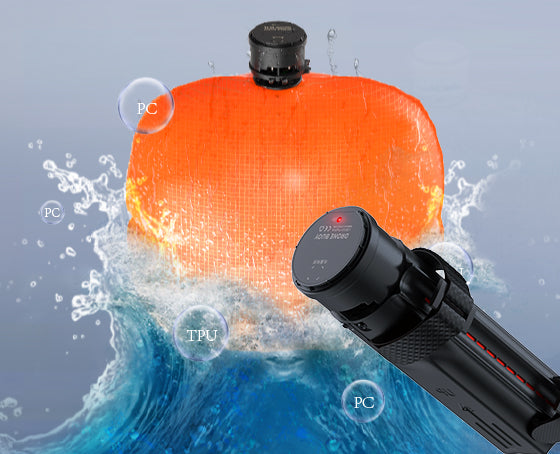
A flotation device is anything that provides buoyancy. Fixed foam floats are one example. An inflatable drone buoy is another: it stays packed during flight and inflates when triggered. Product terminology varies, so compare how a device works rather than relying on its name.
| Consideration | Fixed floats | Inflatable drone buoy | Drone parachute |
|---|---|---|---|
| How it works | Foam or hollow floats remain attached to the aircraft. | A packed flotation unit inflates when triggered. | A canopy deploys to slow descent. |
| During normal flight | The floats’ weight and exposed shape remain present. | The aircraft carries the packed unit and its mounting hardware. | The aircraft carries the packed system and its mounting hardware. |
| Flotation | Depends on capacity, mounting and aircraft weight. | Depends on capacity, deployment, mounting and aircraft weight. | Not a substitute for a flotation device. |
| Primary purpose | Provide buoyancy; suitability for water takeoff and landing must be confirmed. | Help prevent sinking after unexpected water contact. | Reduce descent speed and impact when deployed within its operating limits. |
Fixed floats may suit an aircraft configured for regular water operations, provided the full setup is approved for that use. An inflatable buoy is worth considering when water contact is an emergency risk and you do not want permanently exposed floats. Neither should be selected on weight alone: capacity, mounting and deployment conditions matter just as much.
The FLYFIRE Drone Buoy System
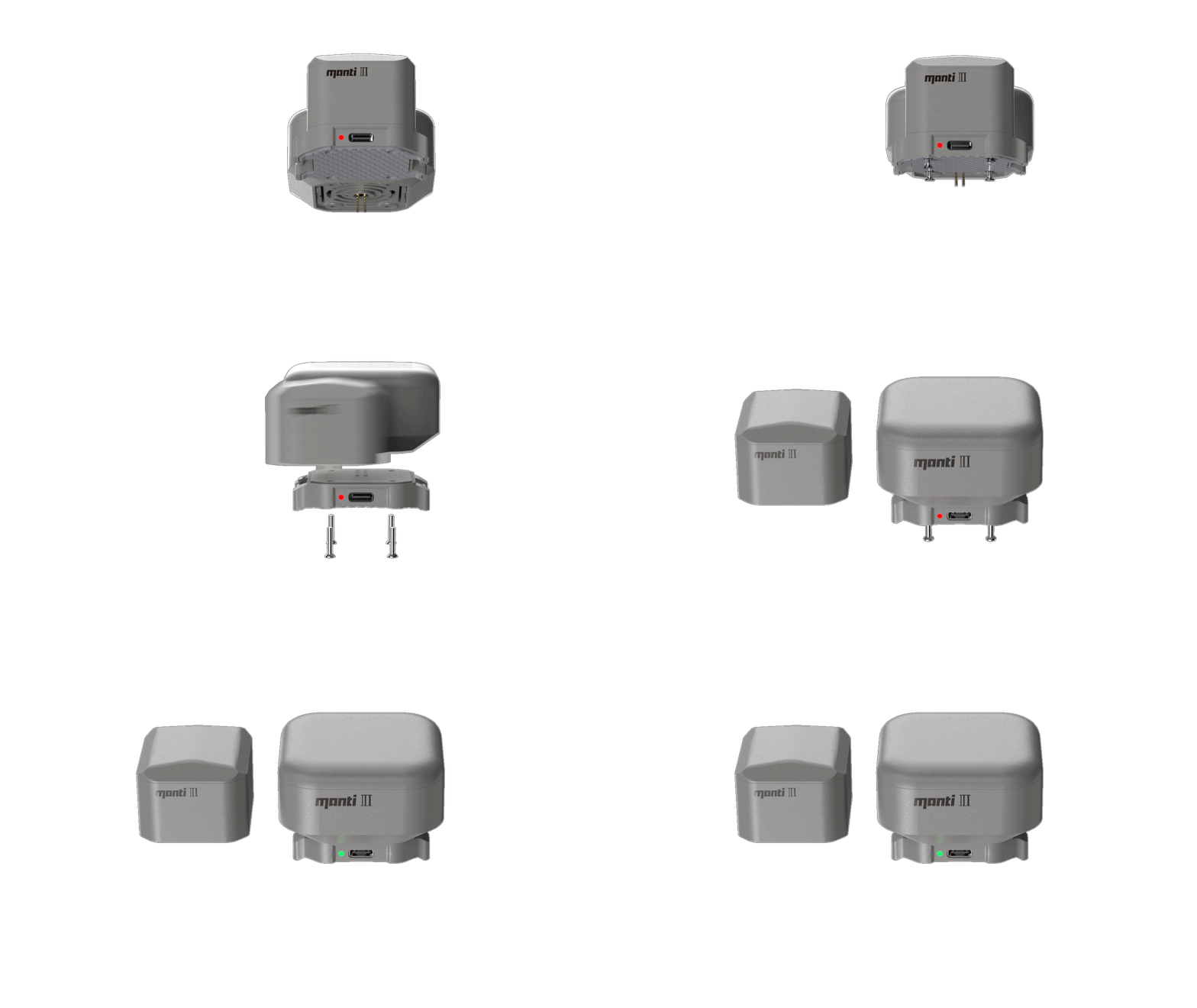
The FLYFIRE Drone Buoy System (2nd generation) is a packed inflatable flotation device. Its listed specifications are:
- Dimensions: 154 × 40 × 43 mm
- Weight: 140 g
- Trigger type: electronic
- Listed timing: “1 s trigger, 5 s float”
- Inflatable displacement: 6,000 cc
Before installation, confirm compatibility with your exact aircraft, payload and mounting arrangement. A reference to a drone series is not confirmation that the device suits every model or configuration in that series. Ask our team to clarify the listed timing and trigger procedure for your setup.
What does 6,000 cc of displacement mean?
It means 6 liters of volume. If fully submerged, that volume displaces about 6 kg of fresh water. This is a theoretical buoyancy calculation, not a 6 kg aircraft rating: the flotation system’s own weight, reserve buoyancy, aircraft orientation and water conditions must also be considered.
Use the aircraft’s actual takeoff weight, including batteries, payload and accessories, when discussing suitability. Do not use displacement alone to decide whether the buoy can support your drone.
Do you need a parachute as well?
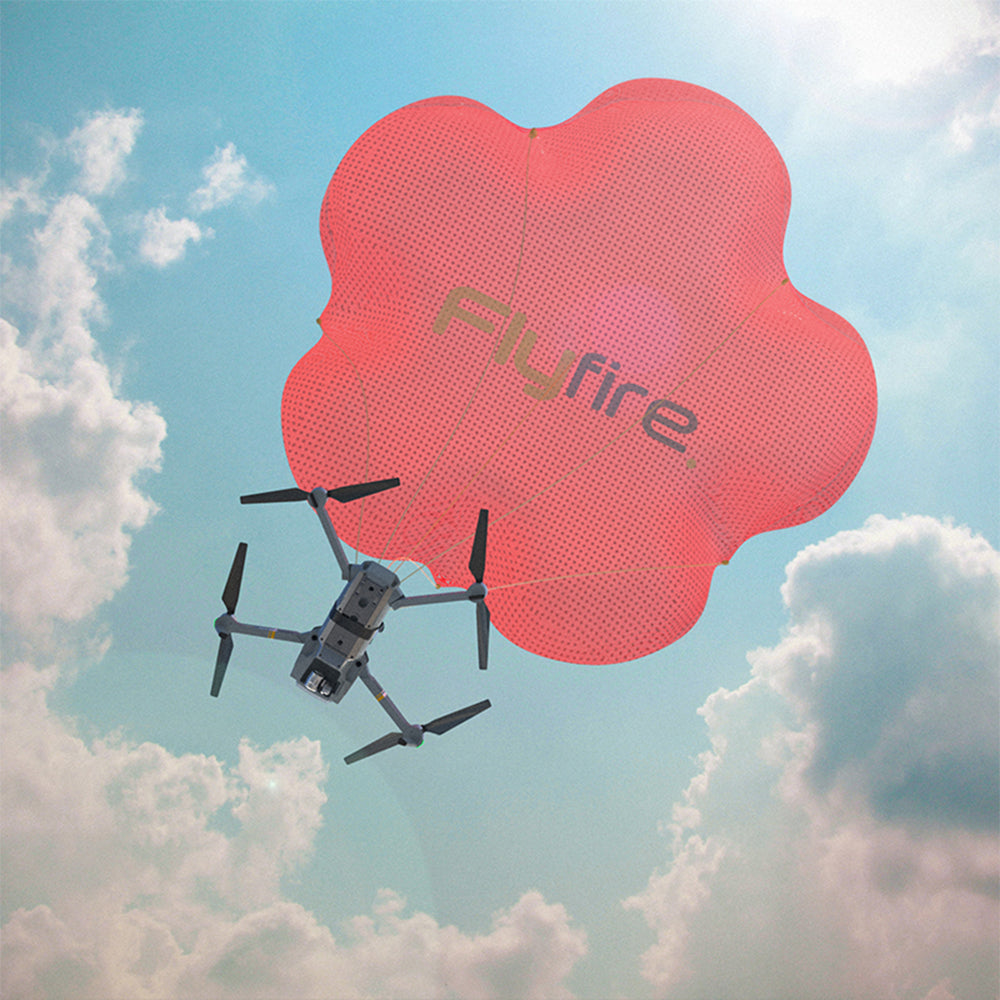
A buoy and a parachute solve different problems. A parachute can reduce descent speed before impact, subject to its deployment requirements and operating limits. A buoy provides flotation after water contact. One does not replace the other.
If you are considering both, confirm that there is enough mounting space and payload capacity, and that neither system obstructs the other. Compatibility needs to be checked for the combined installation, not just for each accessory separately.
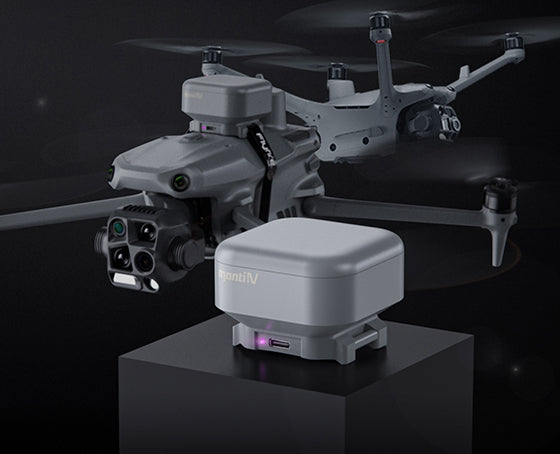
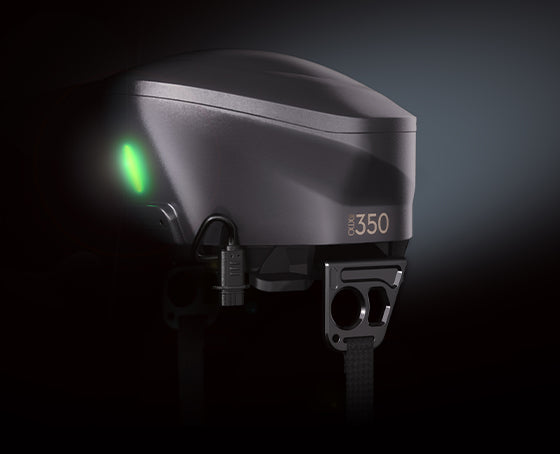
FLYFIRE’s platform-specific parachutes include Manti 4, OWL M400, OWL M350, OWL M30 and Manti 3 Plus. The UPF15 is also listed in our drone parachute range. Confirm the exact model and installation requirements before choosing a system.
Before flying over water
- Weigh the aircraft with its batteries, payload and all fitted accessories.
- Confirm the flotation device’s capacity and compatibility with that configuration.
- Check that the mounting position leaves sensors, antennas, propellers and the gimbal unobstructed.
- Follow the user manual for inspection, arming and any permitted checks. Do not trigger a deployment simply to test it unless the instructions call for that procedure.
- Check wind, weather and water conditions, and plan the flight with enough battery margin to return to a suitable landing area.
- Decide how you would locate and retrieve the aircraft without putting anyone at risk.
Frequently asked questions
Can a drone fitted with floats take off from water?
Not necessarily. Staying afloat and operating from water are different requirements. Only attempt water takeoff or landing if the aircraft and its installed flotation setup are intended for that use.
Will a buoy prevent water damage?
Flotation does not seal the aircraft against water. A buoy may help you retrieve it, but electronics, batteries and payloads can still be damaged by immersion.
Will the FLYFIRE buoy fit my drone?
Send us the exact model, total loaded weight, payload and details of any existing accessories. Our team can review the proposed installation rather than relying on the aircraft’s series name alone.
Can an OWL-M400 or OWL-M350 parachute replace a drone buoy?
No. The OWL-M400 for Matrice 400 and OWL-M350 for Matrice 300/350 RTK are parachute recovery systems, not flotation devices. They are designed to slow descent when deployed within their operating limits; they do not keep the aircraft afloat. For over-water missions, assess flotation separately and confirm the loaded aircraft weight and mounting arrangement before combining systems.
For further reading, see our OWL-M400 asset protection article and Matrice 300/350/400 recovery system audit, which covers platform matching and checks for mixed fleets.
Choosing a setup for your aircraft
Start with the loaded aircraft weight and the conditions you fly in. Then check flotation capacity, mounting and recovery access. If you also need descent protection, evaluate the parachute installation separately. Our guide to drone parachute certifications provides further background, not confirmation that a particular installation is approved.
View the FLYFIRE Drone Buoy or send your aircraft details to bd@flyfiretech.com through our contact page so we can discuss a suitable setup.
