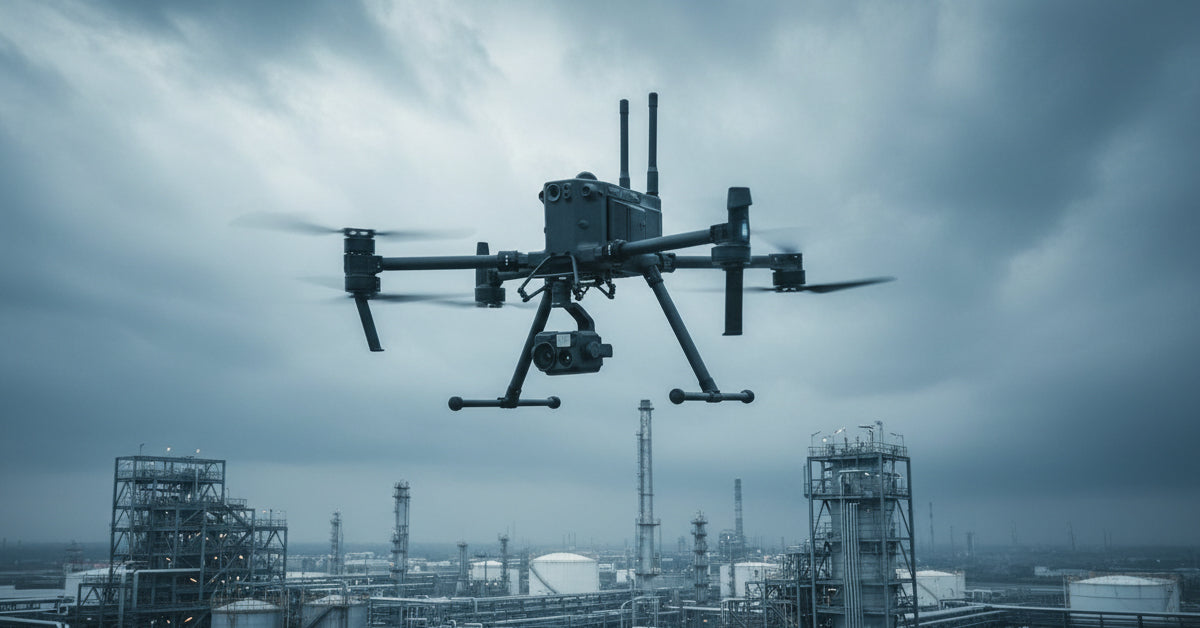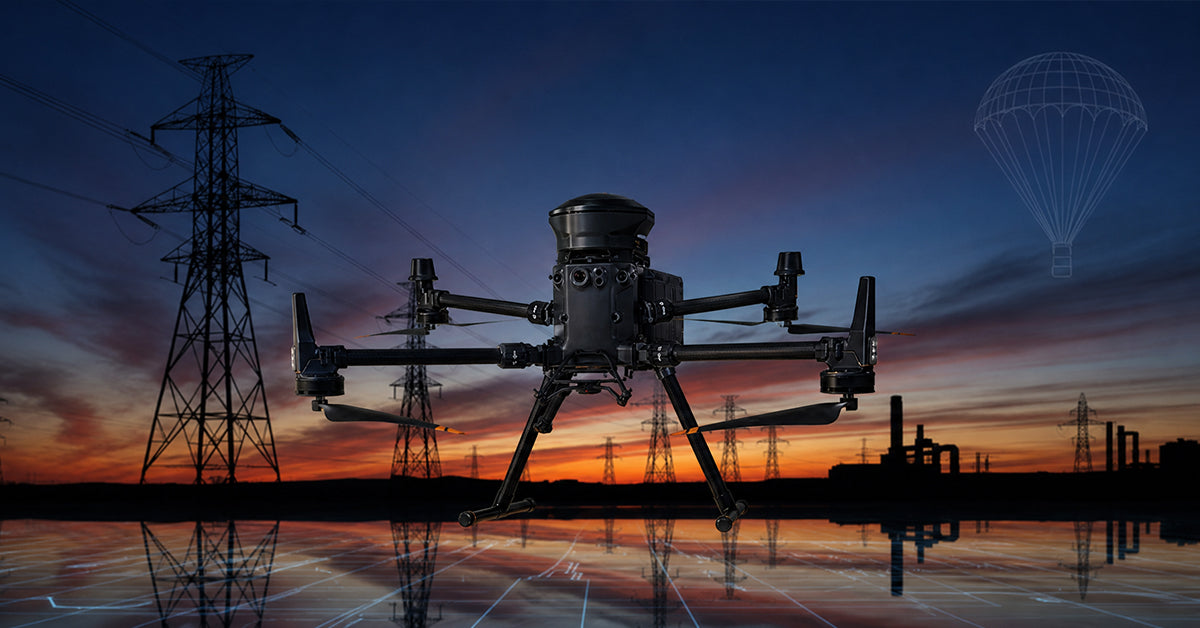



If you fly the DJI Matrice 4D or 4TD in Europe or the UK, a recent firmware release changed what "compliant" means for your fleet, without touching a single piece of hardware.
In June 2026, DJI extended the Matrice 4D Series' existing C6 class certification to cover flights piloted manually with the DJI RC Plus 2 Enterprise controller, not just automated missions launched from a DJI Dock 3. The update ships in firmware version 17.1.5 and later. Before this release, a Matrice 4D or 4TD only carried certified C6 status when it took off from a dock. The airframe met every technical requirement the whole time; DJI simply hadn't extended the certified operational paperwork to cover controller-flown missions yet.
That distinction sounds bureaucratic, but it isn't. A dock is a capital investment: site prep, power, connectivity, and a five-figure price tag before you fly a single mission. A controller and a carrying case are not. This update opens compliant BVLOS operations to teams that never planned to buy a dock in the first place: mobile inspection crews, search-and-rescue units, and utility contractors who need to move the aircraft from site to site.
What actually changed
- Before: Matrice 4D/4TD held C6 certification only when operated from a Dock 3.
- Now: The same C6 status extends to standalone, hand-flown missions using the DJI RC Plus 2 Enterprise controller, provided the aircraft runs firmware 17.1.5 or later.
- What didn't change: The airframe itself. This is a certification and firmware update, not a hardware revision. DJI didn't add a component. It closed a paperwork gap between what the aircraft could already do and what regulators had formally recognized.
C6 is a UAS class marking defined under EU Delegated Regulation 2019/945. It's the regulatory precondition for the Specific category's STS-02 standard scenario: pre-planned BVLOS flight in sparsely populated areas, where pilots hold visual line of sight during takeoff and landing but the aircraft can continue beyond visual range for the rest of the mission.
How the Matrice 4D/4TD actually achieves C6
This is the part worth understanding before you make any purchasing decisions. The Matrice 4D Series reaches C6 through its own built-in independent Flight Termination System (FTS), not through an external parachute.
To qualify as a C6 aircraft, a drone needs to meet a specific set of technical requirements: a maximum takeoff weight under 25 kg, geocaging capability, flight volume enforcement, command-and-control link monitoring, and an independent flight termination system that automatically activates if the aircraft leaves its approved operational area. DJI built these into the Matrice 4D and 4TD hardware from the start. The June 2026 update simply widened which flight configurations get to claim that status.
It helps to separate two distinct engineering objectives here: flight termination and flight recovery. C6's independent FTS requirement is built around containment: if something goes wrong, the flight ends within the boundaries of the approved operational area. That's the technical bar the certification tests for. What happens physically to the aircraft, its payload, and whatever's beneath it in the seconds after termination is a separate engineering question, and it's the one a purpose-built recovery system is designed to answer. The Matrice 4D Series checks the containment box through its own onboard FTS. Whether that's the full safety picture you want for a given mission is a call that sits with the operator, not the regulator. That's what the next section digs into.
Compliant aircraft ≠ approved operation
One thing DJI states plainly, and worth repeating here: C6 status on the airframe doesn't grant you STS-02 privileges on its own. Certification covers the aircraft. It doesn't cover you as an operator.
To legally fly under STS-02, you still need to handle the operator-side requirements yourself:
- An STS-02 declaration or operational authorization filed with your national competent authority
- A theoretical knowledge certificate
- An STS-02 practical skills certificate
- An operations manual
- A maintenance logbook
- An emergency response plan
None of that is waived because the aircraft carries a C6 label. If you're evaluating a move to standalone M4D/4TD operations off the back of this update, budget time for the operator-side paperwork alongside the technical setup.
Termination vs. recovery: why many operators add a parachute anyway
The distinction above plays out in practice more than you'd expect. Containment satisfies the regulatory minimum. It doesn't automatically deliver the outcome your risk register, your insurer, or your client's safety officer actually cares about most: a controlled, low-energy landing that protects the airframe, the payload, and whatever's underneath the flight path.
A handful of practical gaps show up once teams move from demo flights to routine BVLOS operations:
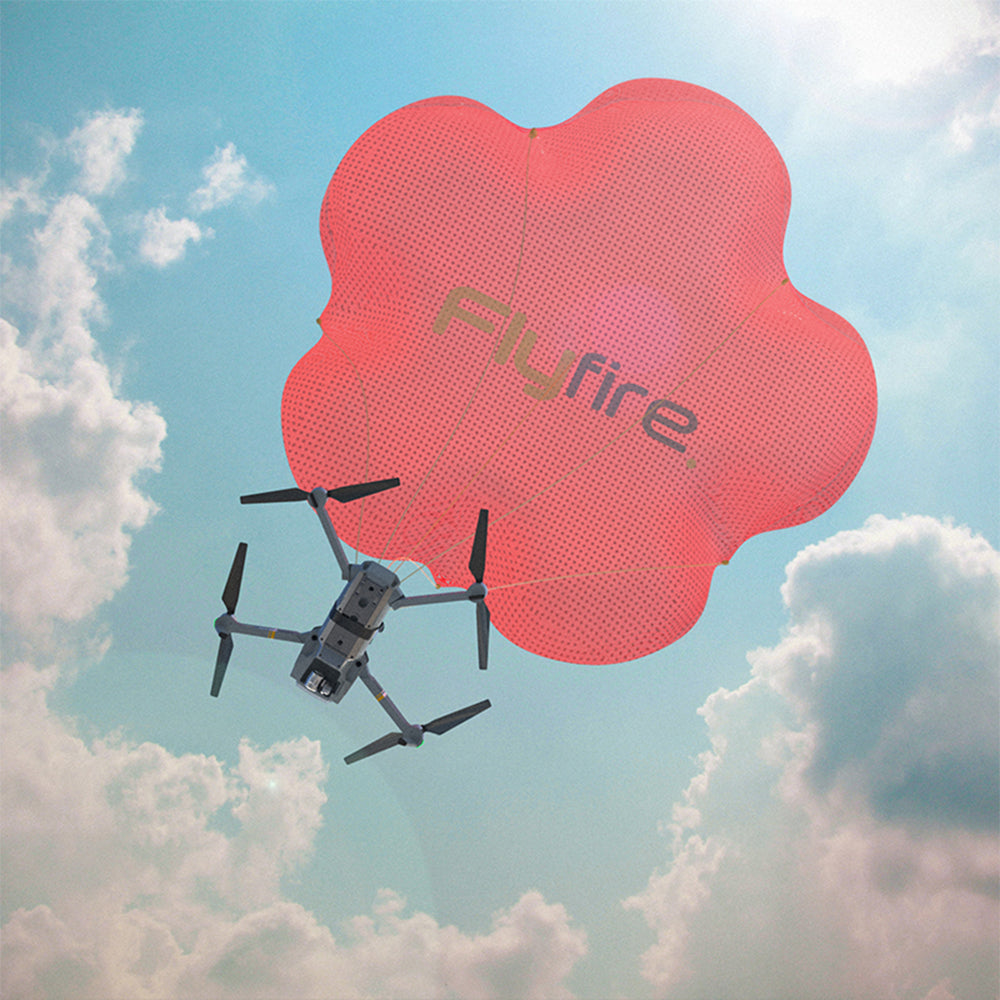
- Propeller entanglement during recovery. Plenty of recovery systems perform fine in a controlled demonstration. Real-world deployments are less forgiving. If a drone loses propulsion mid-mission and the motors are still spinning while a parachute deploys, the canopy lines can catch on the propellers or arms and destabilize the descent right when stability matters most. A system that only pops a canopy without coordinating a motor cutoff is solving half the problem.
- Payload protection. The FTS is built to bring the aircraft down within its approved operational area. It isn't optimized to protect the thermal camera, LiDAR unit, or mapping payload riding on it. For fleets running the 4TD on infrastructure inspection or public safety missions, that payload is often worth more than the airframe.
- Risk documentation for SORA and insurance. As BVLOS moves from one-off waivers to routine, scaled operations, insurers and safety officers increasingly want to see redundant risk mitigation layers, not just the regulatory floor. A parachute and FTS combination that's documented, logged, and independently verifiable strengthens that case.
- Deployment in mobile, hand-flown scenarios. The June 2026 update means more M4D/4TD missions will now happen away from the controlled environment of a fixed dock: different sites, different terrain, less predictable surroundings. That variability is exactly the scenario where an extra layer of physical recovery earns its keep.
None of this means a parachute is mandatory for C6. It means the aircraft's built-in system and an add-on recovery system are solving different problems, and enterprise operators (public safety agencies, utilities, insurers with their own internal safety bars) are increasingly asking for both.
Meet the Manti 4 Dock: built for M4D/4TD and Dock 3 deployments
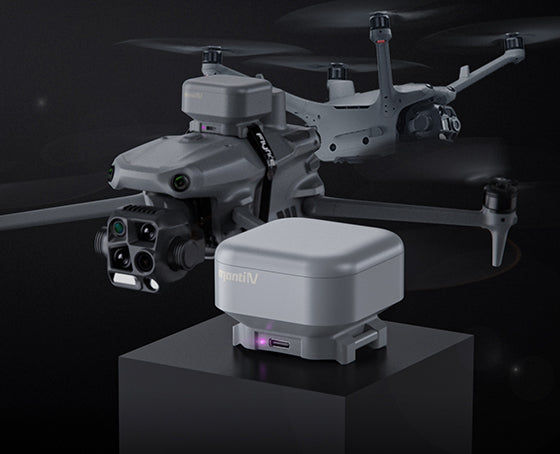
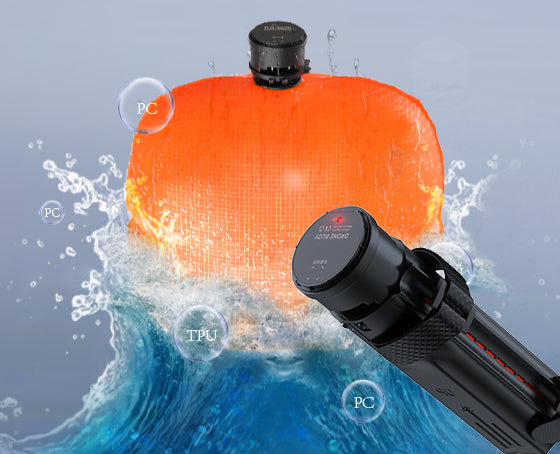
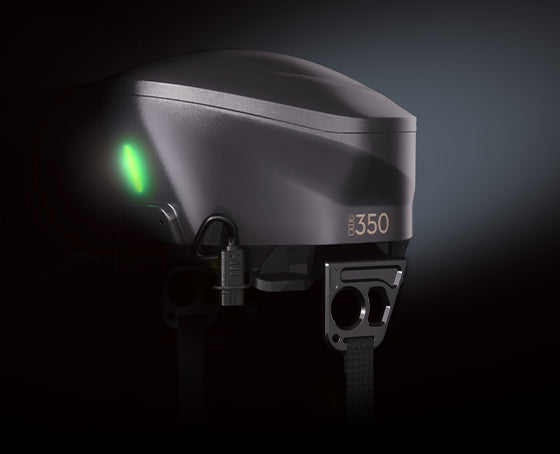
FlyFire's Manti 4 Dock parachute and FTS system was engineered around exactly the gaps above, specifically for Matrice 4D and 4TD operations.
Native aircraft integration
The Manti 4 Dock connects through DJI's ePort-lite PSDK communication interface, the same official framework DJI opens up for payload developers. That gives it a precise physical and electronic fit with M4D/4TD hardware. It's a closer relationship to the airframe than a generic external mount: the system talks to the flight controller natively, which is what makes the real-time coordination described below possible in the first place. Because it's designed around the aircraft's own systems rather than adapted to fit them after the fact, it's one of the closest-matched recovery systems available for this platform.
That native connection solves the entanglement problem at the source. Instead of treating the parachute as a standalone accessory, the Manti 4 Dock communicates directly with the DJI flight controller. When a critical descent profile is detected, it sends a motor-stop command before the canopy deploys, stopping rotor rotation ahead of ejection so the parachute lines don't compete with spinning propellers during descent.
Dock-compatible design
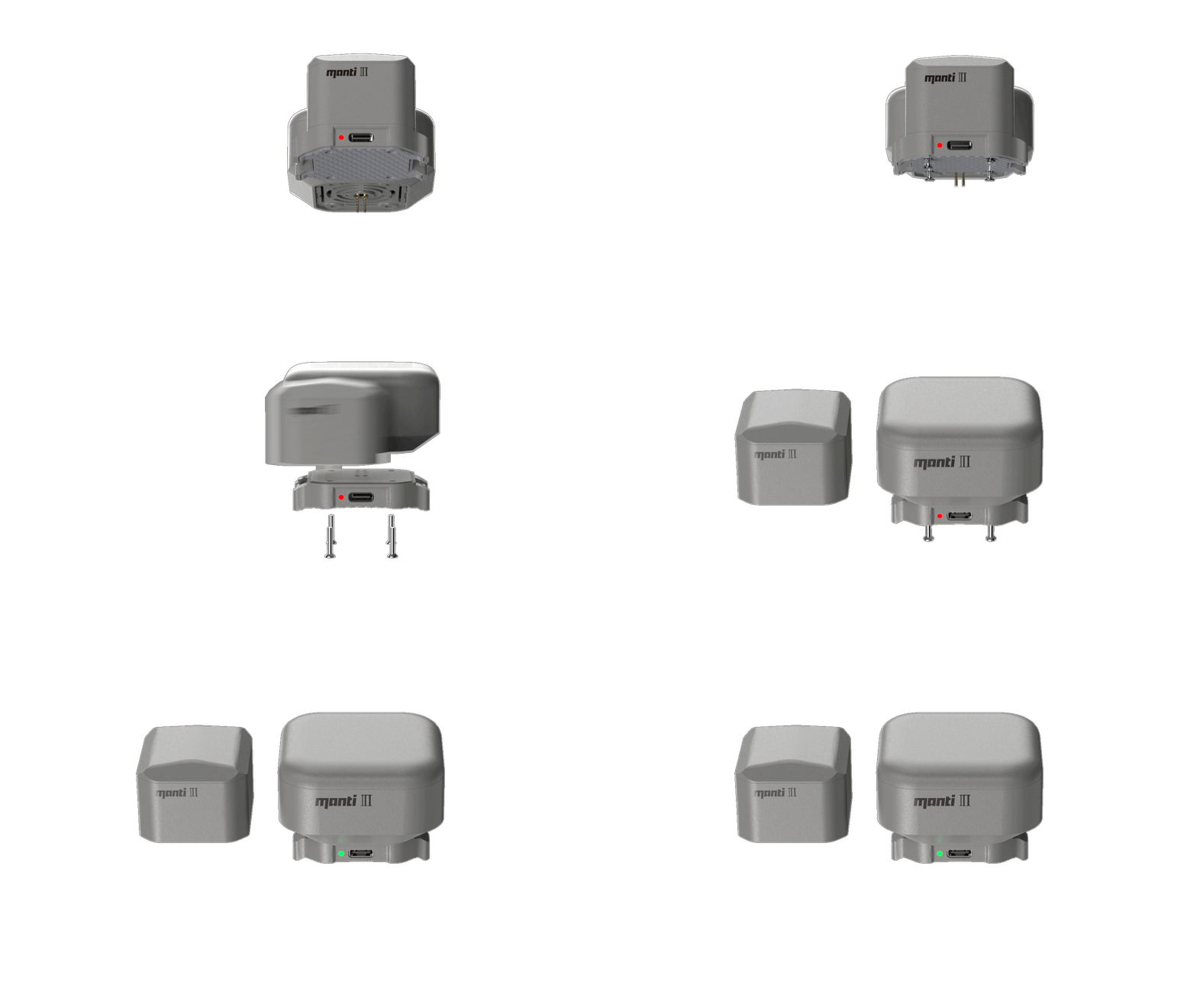
Its low-profile footprint preserves the dock's automated mechanical arm alignment, canopy closure, and contact charging cycles. It won't interfere with your existing Dock 3 automation.
Full software-level integration
The Manti 4 Dock is monitorable and controllable directly through DJI Pilot 2 and DJI FlightHub 2. Operators can check parachute status and trigger the FTS remotely, which matters for exactly the kind of unattended, automated BVLOS missions this class of aircraft is built for.
Fast, engineered response
Built on FlyFire's APS 3.0 deployment algorithm, the system is engineered for an end-to-end response (from fault detection to full deployment) of around 500 milliseconds. The 1.1 m² canopy produces a controlled sink rate of 5.8 m/s and limits impact kinetic energy to 29.241 joules, a figure that matters directly for flight-over-people and flight-over-property risk assessments.
Built for fleet operations
A modular, user-replaceable canopy bay keeps turnaround fast after a deployment. Fast charging brings the unit to roughly 70% in 30 minutes, supporting rapid redispatch across multi-sortie schedules. Automatic log export lets your team analyze exactly what triggered a deployment and when, useful for both maintenance and for building your SORA risk-mitigation documentation.
Built for unmanned scenarios
An optional Warning Light Edition adds red-and-blue dual flashing lights, manually activated through DJI Pilot 2 or DJI FlightHub 2 before a mission, to warn and deter ground personnel near the aircraft when no pilot is physically present. That detail matters more, not less, as more missions move to standalone and dock-based deployment under this update.
Who should actually consider this upgrade
- Operators moving M4D/4TD missions off the dock and into hand-flown, mobile configurations under the new standalone C6 status
- Public safety and emergency response teams whose internal risk policy exceeds the regulatory minimum
- Enterprises with thermal, LiDAR, or mapping payloads where equipment loss is a material cost, not just an inconvenience
- Fleets building or renewing insurance coverage where documented, redundant risk mitigation directly affects premiums
- Teams preparing SORA documentation for scaled, routine BVLOS operations rather than one-off waivers
Ready to add a redundant safety layer to your Matrice 4D or 4TD fleet? See full specs for the Manti 4 Dock Parachute + FTS system.