


For a Q4 drone purchase, start with the deliverables: mapping accuracy, sensor type and daily coverage. Then check which aircraft meet the tender requirements and what the full package will cost, including batteries, software, training and safety equipment. This guide compares the Matrice 4 series, Dock 3, Matrice 350 RTK and Matrice 400 for mapping, surveying and public-sector procurement.
Matrice 400, Matrice 350, Matrice 4 series and Dock 3 at a glance
| Comparison | Matrice 4E / 4T | Matrice 4D / 4TD + Dock 3 | Matrice 350 RTK | Matrice 400 RTK |
|---|---|---|---|---|
| Best for | Mapping (4E), thermal inspection (4T) | Unattended, scheduled or first-responder missions | Proven multi-payload platform | LiDAR, heavy and multiple payloads |
| Payload | Integrated camera | Integrated camera | Up to 2.7 kg, 3 payloads | Up to 6 kg, up to 7 payloads |
| Flight time | Up to 49 min | 47 min hover | 55 min without payload | 59 min with Zenmuse H30T |
| Weather rating | None | Aircraft IP55, dock IP56 | IP55 | IP55 |
| Indicative US price (see note) | $5,189 (4E), $7,849 (4T) | $24,272 with 4D, $26,412 with 4TD | Varies; some retailers list it as discontinued | About $10,450 |
Flight-time figures use different test conditions and are not directly comparable. Confirm endurance with your planned payload and safety equipment.
Retail reference prices, October 2026. Use them for budgeting; ask your supplier for a current quote.
Before ordering, confirm the quoted configuration, technical specifications, taxes and duties, and delivery terms with the supplier.
Which one should you buy?
Check the tender’s eligibility requirements before comparing aircraft specifications.
Matrice 4E or Matrice 4T for mapping?
If mapping is the main task, the 4E is the more relevant option. It has a 20 MP, 4/3-inch mechanical-shutter wide camera, and DJI supports mapping without ground control points on it once RTK is enabled. Consider the 4T if the work also requires thermal imaging.
Neither is weatherproof: DJI gives the Matrice 4 series no IP rating and advises landing as soon as possible if it rains.
Matrice 400 or Matrice 350 RTK?
Consider the Matrice 400 for LiDAR, combined thermal and zoom payloads, or jobs that need more lift. It carries up to 6 kg and as many as seven payloads at once, flies up to 59 minutes with the H30T, and adds rotating LiDAR and mmWave radar sensing. The Matrice 350 RTK carries up to 2.7 kg and three payloads, and flies up to 55 minutes without a payload. Both are rated IP55.
If your team already uses the Matrice 350 RTK and its payload requirements stay under 2.7 kg, compare the cost of keeping that fleet with the cost of switching. Include batteries, payload compatibility and crew training. Before ordering a Matrice 400, check support for each payload you plan to reuse. Confirm Matrice 350 availability with your dealer if you intend to buy additional aircraft.
Dock 3 with Matrice 4D or 4TD for unattended missions
Dock 3 is DJI’s first dock that can be mounted on a vehicle. The dock is rated IP56 and the Matrice 4D and 4TD aircraft IP55. It handles landing winds up to 12 m/s, works from −30 °C to 50 °C and deploys up to 4,500 m. The 4TD adds a thermal camera and a near-infrared auxiliary light for tasks such as drone-as-first-responder and security work.
The dock alone costs about $15,890. With a Matrice 4D it is about $24,272 and with a 4TD about $26,412, hardware only. Budget separately for site power (up to 800 W input), network, mounting and FlightHub 2. For vehicle installations, account for the dock’s 55 kg weight without the aircraft.
If your tender requires NDAA or Blue UAS
Platforms to check against the tender requirements include the WingtraRAY for VTOL mapping, the Inspired Flight IF800 Tomcat for heavy payloads and the Skydio X10 for inspection and public safety. Verify each platform’s list status on the date of your tender.
Specify the data, not just the drone
Specify the deliverables as well as the aircraft so the supplier knows how the results will be assessed. Include:
- Accuracy target: horizontal and vertical RMSE, and whether ground control points are allowed or required.
- Sensor type: photogrammetry suits open terrain and visual deliverables; LiDAR suits vegetation, corridors and bare-earth models.
- Positioning: RTK or PPK, and whether a base station or a network subscription is included.
- Throughput: acres or hectares per day, per crew.
- Formats and software: orthomosaic, DSM, LAS/LAZ point cloud, and which processing software must be supported.
Accessories to include in the quote
Check whether the aircraft quote includes the equipment and services needed for a full working day. Request separate prices for:
- Extra batteries and a field charger that runs from a vehicle inverter or generator
- RTK base station or network RTK subscription
- Hard cases, spare propellers and gimbal protection
- Fleet-management and processing software licenses
- Site power, network and mounting for docked systems
- Training, insurance and Remote ID or registration costs
Safety equipment: where a parachute fits
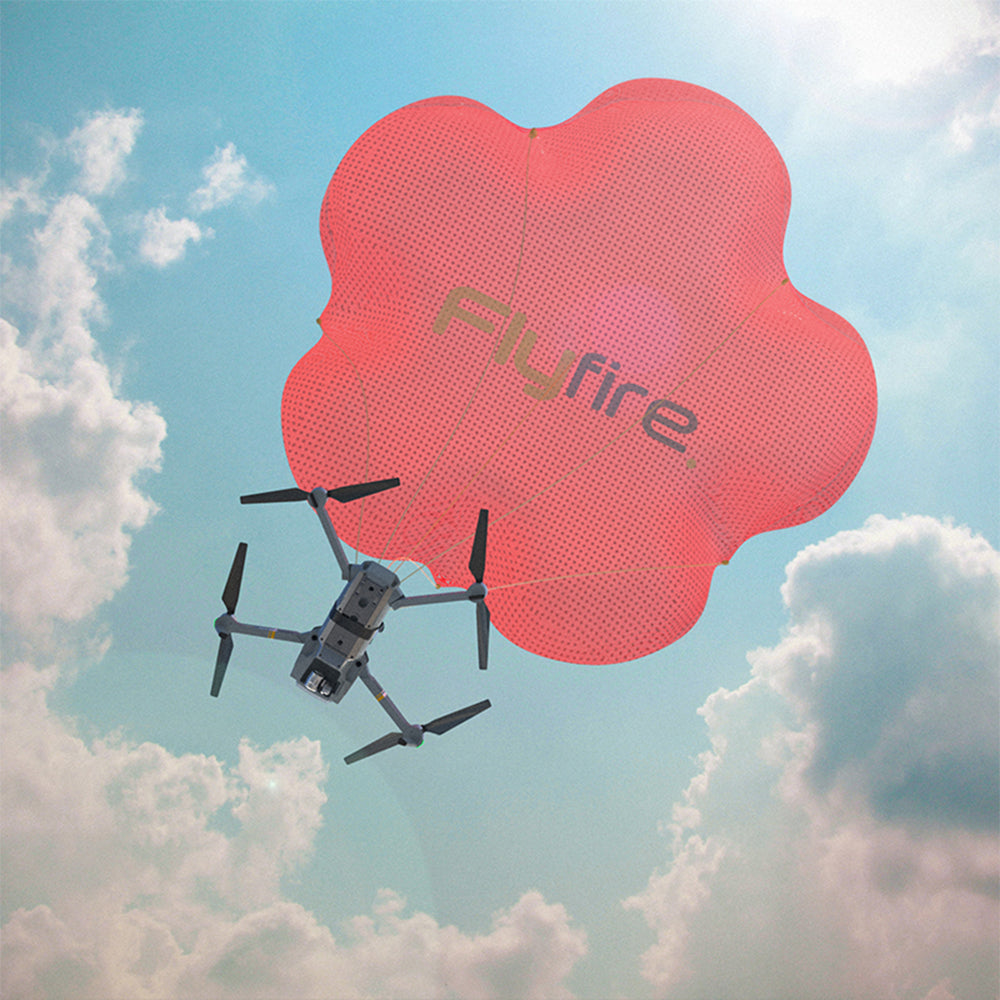
When comparing safety equipment, consider what happens if the aircraft fails. A parachute recovery system (PRS) is designed to reduce impact energy after deployment. For flights over people, BVLOS or docked operations, check whether the relevant authority accepts the proposed system as a mitigation for the planned operation. ASTM F3322 covers PRS design, fabrication and testing, and EASA has published means of compliance (MOC Light-UAS.2511 and 2512) that PRS suppliers reference.
A parachute does not, by itself, provide operational approval. Approval depends on the airframe, payload and PRS combination, its supporting documentation, and the authority reviewing the operation.
When to include a parachute in the budget
- You fly near people, roads, plants or other third-party assets
- You carry an expensive payload: a Zenmuse L3 LiDAR (about $17,400) can cost more than the aircraft that carries it
- You plan BVLOS or docked operations, or a client or insurer asks for a safety case
Other risks to consider
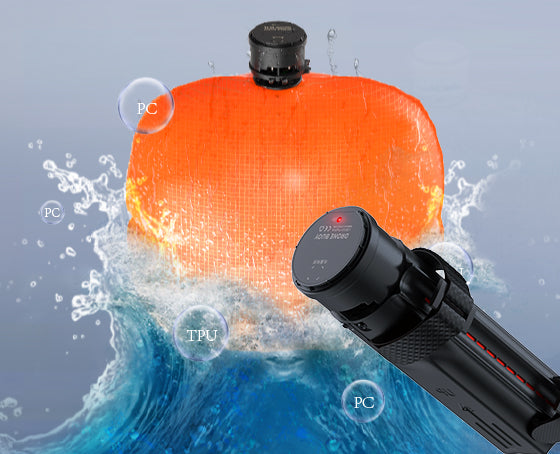
On remote open land with nobody below, consider the remaining risks to the aircraft and payload. A parachute does not resolve every flyaway or water-landing scenario; for water work, assess flotation equipment separately.
Parachute specification checklist
| Check | Why it matters |
|---|---|
| Airframe and payload compatibility | The rated load must cover your real takeoff weight with the payload you fly |
| Deployment trigger | Ask whether it uses independent sensors or flight-controller data, and how it handles false triggers |
| Response time and minimum deployment height | Decides whether it helps in low-altitude failures |
| Descent rate and impact energy at maximum weight | This is what regulators and insurers look at |
| Operating temperature and altitude | Must match your sites |
| Power | Built-in battery or aircraft power; how it is tested before each flight |
| Reusability and repack procedure | Affects cost per incident |
| Certification and test documents | Ask for the reports, not just the claim |
| Dock or enclosure integration | Required if you run docked missions |
Which FlyFire system fits which aircraft
| Aircraft | FlyFire system | Notes |
|---|---|---|
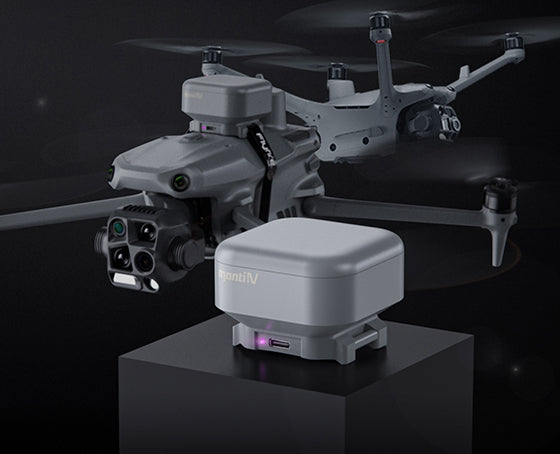
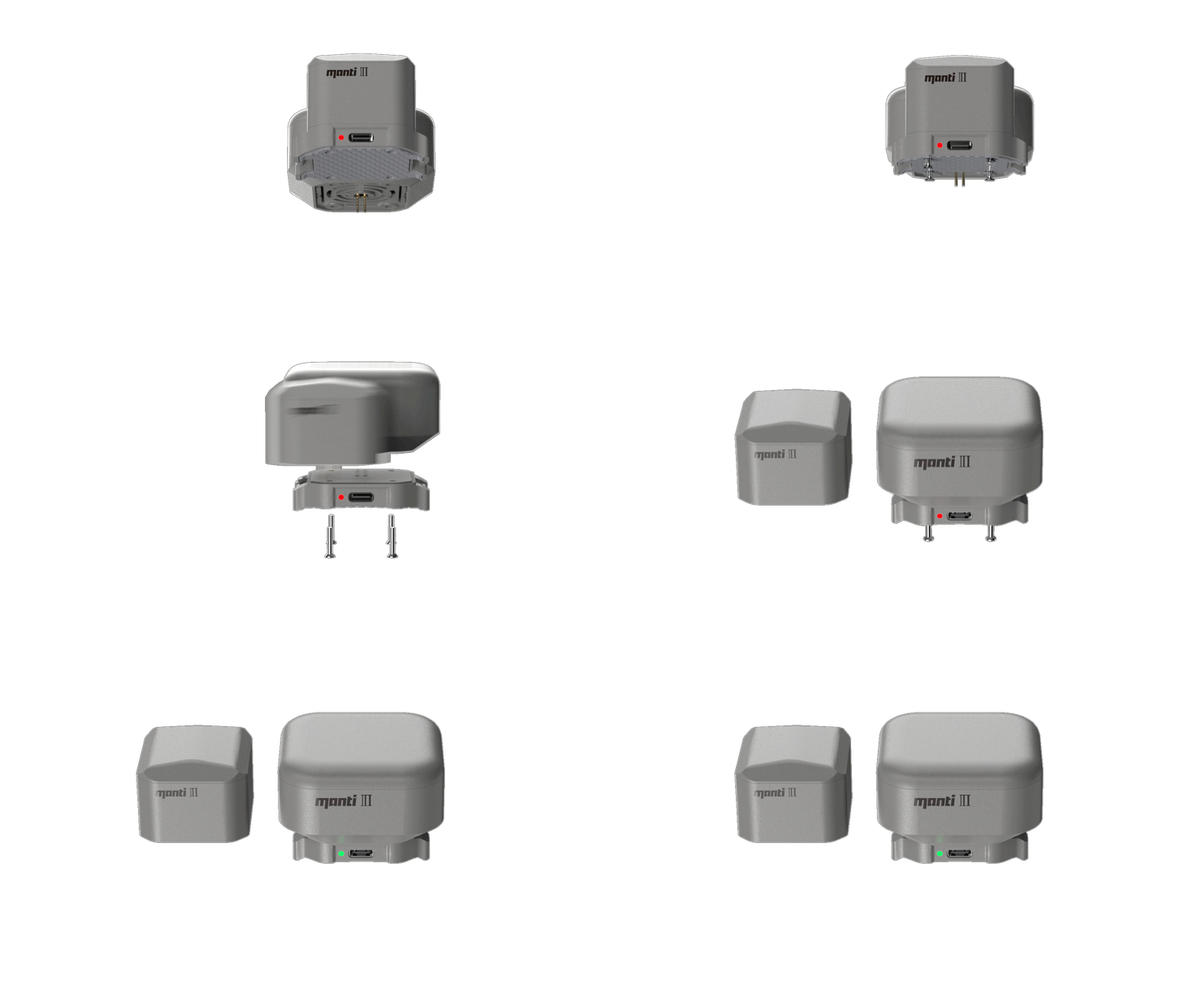
| Matrice 4E / 4T (Matrice 4 series) | Manti 4 | Weight: 72 g High-strength canopy: 1.1 m² Descent rate: 5.5 m/s Maximum operating altitude: 4,000 m Standby time: 4.5 h (independent power supply) |
| Matrice 4D / 4TD on Dock 3 | Manti 4 with FTS for Dock 3 | High-strength canopy: 1.1 m² Descent rate: 5.8 m/s Impact kinetic energy: 29.241 J Maximum operating altitude: 4,000 m Minimum deployment altitude: 30 m Independent power standby: 4.5 h |
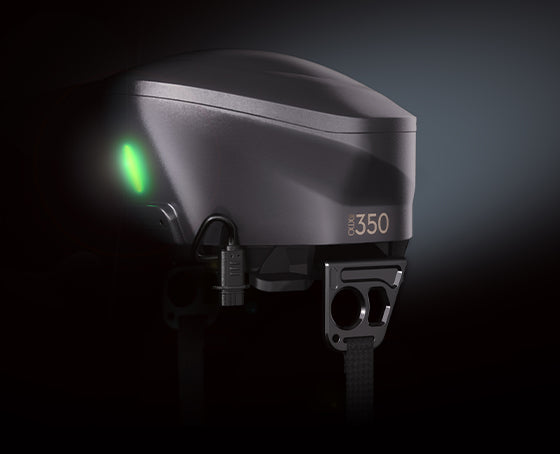
| Matrice 350 RTK | OWL-M350 | Rated load: 9 kg Canopy: 7.29 m² Descent rate: about 3.5 m/s Working altitude: up to 3,500 m Power: built-in battery Deployment algorithm: APS 3.0, using flight sensor data |
| Matrice 400 RTK | OWL for Matrice 400 RTK | Canopy: 7.29 m² Rated load: 15.8 kg Descent speed: 3.5–4.5 m/s Net weight: 1,000 g Maximum operating altitude: 3,500 m Operating temperature: −20 °C to 50 °C Response time: 500–700 ms Deployment altitude: 25 m Protection: IP45 |
| Over-water operations | Drone buoy system | Product size: 154 × 40 × 43 mm Weight: 140 g Start mode: electronic trigger, 1 s trigger, 5 s float Inflatable displacement: 6,000 cc Applicable models: DJI Mavic series, DJI Phantom series, DJI Matrice series and other brands of drones |
For installation and firmware information, see the user manual.
Documents to request with the tender
Adapt these requirements for your RFP:
- State the compliance regime (NDAA, Blue UAS, TAA or local equivalent) and the evidence required
- Require a country-of-origin and critical-component declaration
- Require the supplier’s firmware update and data-handling policy
- Require an accuracy test report for the specified deliverable
- Require parachute or other safety equipment documentation: certification, test reports, installation guide
- Require warranty terms, spare-parts availability, local service and training
- Require quote validity dates and a clause on duty or tariff changes
- Require a delivery schedule with a penalty or remedy for delay
Four configurations to request quotes for
A. Survey crew, open terrain
Request a quote for a Matrice 4E, RTK solution, spare batteries, field charger and a Manti 4. Check whether the proposed parachute installation meets the requirements of work near roads or people.
B. Corridor and LiDAR
Request a quote for a Matrice 400 RTK, Zenmuse L3 and an OWL for Matrice 400 RTK. The payload can cost more than the airframe. Include recovery equipment when estimating the total package cost.
C. Existing Matrice 350 fleet
Compare the cost of keeping the current fleet, adding spare batteries and fitting an OWL-M350 with the cost of buying new aircraft. Check PRS compatibility with your existing aircraft and payloads before ordering.
D. Unattended or first-responder
Request a quote for Dock 3 with a Matrice 4TD and the Manti 4 for Dock 3. Ask for documentation covering the dock installation, parachute integration and planned operating conditions.
Q4 purchasing schedule
- Now to mid-November: finalize the specification and request quotes with validity dates.
- Late November: review compliance documents and agree who bears duty changes.
- December: issue the purchase order, confirm delivery dates and schedule training before the budget closes.
- For U.S. imports in Q1 2027: review the February 9, 2027 tariff provisions for the specific UAS components listed in Annex III of the U.S. proclamation. These provisions are not a global tariff rule; confirm product coverage and any applicable exceptions with your customs broker before ordering.
- For U.S. BVLOS planning: check the FAA’s latest Part 108 rulemaking updates and the requirements applicable to your proposed operation before setting the purchasing or deployment schedule.
