


DJI launched Dock 4 on October 14, 2026. It's the company's first drone-in-a-box with an automatic battery swap, and it comes with a new aircraft, the Matrice 5TD. If you already run Dock 3 with the Matrice 4TD, the question is a practical one: is the new system worth replacing yours? For some operators it is. For many others, the fleet you have still does the job. This guide compares the two systems on specs and use cases so you can decide without the launch-week hype.

Quick answer
An upgrade is worth considering if your missions are triggered by events (emergency response, security alarms), if you need the aircraft ready around the clock with minimal downtime, if you work in very cold climates, or if you rely on long-range thermal and night imaging.
Keeping Dock 3 + Matrice 4TD is just as reasonable if your flights are mostly scheduled and repeatable, if your sites have limited power or space, if the work leans toward mapping, if you deploy from vehicles, or if you've already built workflows around your current fleet.
What is DJI Dock 4?
Dock 4 is the latest generation of DJI's drone-in-a-box line. The big change is automatic battery swapping: after the aircraft lands, the dock exchanges the battery in under 25 seconds, and the aircraft can be airborne again in under 45 seconds. Dock 3, by contrast, charges the battery in place, which takes about 27 minutes from 15% to 95%.
Dock 4 works with one aircraft, the Matrice 5TD, and with a new DJI O4 Ground Station that handles RTK and transmission. The 5TD brings a higher-resolution thermal camera, a longer laser rangefinder, built-in LiDAR and millimeter-wave radar, expanded onboard AI recognition, and a larger accessory payload.
On pricing and availability: DJI hasn't published international pricing and says Dock 4 is sold through authorized enterprise dealers. In China, the launch package (Dock 4, Matrice 5TD, O4 Ground Station and four batteries) is listed at ¥167,999, hardware only. Don't expect it in the United States, though: new DJI products currently can't obtain FCC authorization.

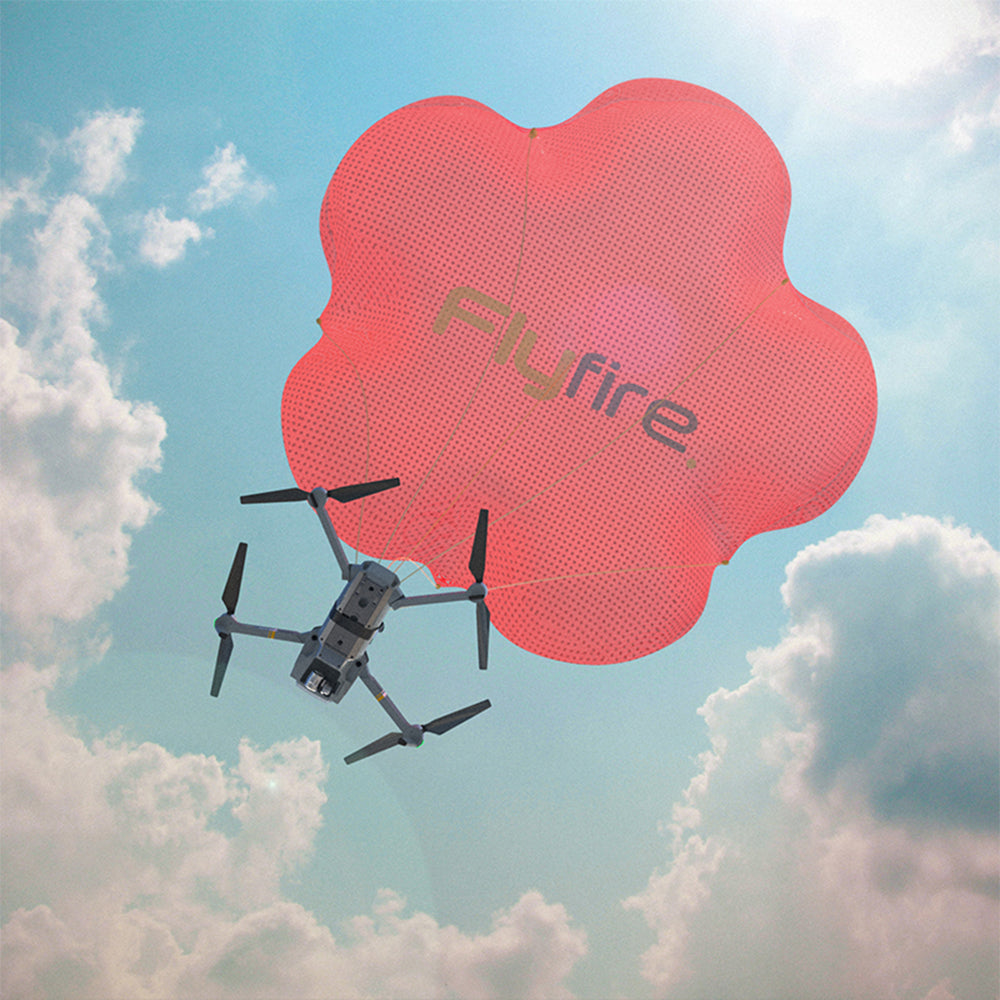
(FLYFIRE Manti 4 Drone Parachute+FTS for DJI Dock 3)
Dock 4 + Matrice 5TD vs. Dock 3 + Matrice 4TD: specs side by side
| Spec | Dock 3 + Matrice 4TD | Dock 4 + Matrice 5TD |
|---|---|---|
| Battery handling | In-dock charging, about 27 min (15–95%) | Automatic swap in under 25 s; relaunch in under 45 s |
| Battery storage | Charged in the aircraft | Up to 3 batteries across 4 compartments |
| Max flight time | 54 min | 59 min |
| Operating radius | 10 km | 10 km |
| Dock operating temperature | -30°C to 50°C | -40°C to 50°C |
| Dock / aircraft IP rating | IP56 / IP55 | IP56 / IP55 |
| Landing wind limit | 12 m/s | 12 m/s |
| Max operating altitude (dock) | 4,500 m | 5,000 m |
| Dock weight | About 55 kg | About 66 kg (excl. aircraft and batteries) |
| Dock size, lid closed (mm) | 640 × 745 × 770 | 639 × 640 × 836 |
| Max input power | 800 W | 2,000 W |
| RTK | Built into the dock | Via O4 Ground Station |
| Visible cameras | 3 × 48 MP | 3 × 50 MP |
| Thermal camera | 640 × 512 (1280 × 1024 with Super Resolution) | 1280 × 1024 (2560 × 2048 with Super Resolution) |
| Laser rangefinder | Up to 1.8 km | Up to 3 km |
| Max hybrid zoom | 112× | 176× |
| Obstacle sensing | Vision + 3D infrared; radar is an optional module that reduces flight time | Vision, LiDAR, mmWave radar and 3D infrared built in |
| Onboard AI | 3 categories | 17 target types |
| Accessory payload | 240 g | 450 g, up to 3 accessories |
| Flight termination / parachute | Third-party options available; DJI's AP1 reportedly planned for early 2027 | Built-in independent FTS; AP1 parachute standard on UK/EU units |
| Vehicle-mounted use | Supported with an optional accessory | Not described in the launch materials we reviewed |
| Compatible aircraft | Matrice 4D / 4TD | Matrice 5TD only |
Flight-time caveat: The 59-minute figure for the 5TD was measured at 15 m/s with no payload, while the 4TD's 54 minutes was measured at 12 m/s, so the two numbers aren't a like-for-like comparison.
What the differences mean in practice
Turnaround time
Battery swapping removes the wait between sorties, which matters most when missions are triggered by events. It doesn't buy unlimited flight time, though. Swapped-out batteries still need roughly 27 minutes to recharge, and the dock holds up to three, so availability depends on how many charged packs are on hand. If you fly a few scheduled sorties a day, Dock 3's charging time is rarely the bottleneck.
Sensors and AI
The 5TD's thermal sensor has four times the native pixels of the 4TD's, and the aircraft adds a longer rangefinder, more zoom, built-in radar and LiDAR, and recognition of 17 target types instead of 3. These upgrades help most with long-range thermal search, night security and wide-area monitoring. If your work is mostly close-range inspection, test whether you would actually use the extra range and resolution before paying for it.
Footprint and site requirements
Dock 4 is heavier (about 66 kg vs 55 kg) and takes more power at the maximum (2,000 W vs 800 W). RTK moves off the dock onto the O4 Ground Station, which connects over PoE; DJI's deployment diagram shows cable runs under 80 m and a distance of under 40 m from the dock. Rooftops, towers and low-power sites need a feasibility check first. Worth noting: 2,000 W is the maximum input, not typical consumption.
One compatibility point that matters
Dock 4 only works with the Matrice 5TD, so a Matrice 4TD fleet can't simply move into it. Whether a 5TD can fly from a Dock 3 hasn't been confirmed by DJI; one dealer mentions a rumor of future firmware support, but treat that as unverified. In practice, an upgrade means replacing the dock, the aircraft and the ground station, plus redoing the training, mission libraries and approvals tied to your current setup.

When it makes sense to keep Dock 3 + Matrice 4TD
- Scheduled, repeatable missions: Routine patrols and inspections on a timetable don't suffer from a 27-minute charge between sorties.
- Overlapping coverage: If several docks already cover the same area, a neighboring dock can pick up while one is charging.
- Mapping-heavy work: Dock 4 pairs only with the 5TD, whose wide camera uses a rolling shutter and relies on algorithms for survey accuracy. The Matrice 4D in Dock 3 has a 4/3-inch sensor with a mechanical shutter, which one major dealer still recommends for photogrammetry.
- Vehicle-mounted or temporary deployment: Dock 3 supports launching from a vehicle with an optional gimbal accessory. We haven't seen the same described for Dock 4, which is also heavier.
- Constrained sites: Lower weight and power draw, plus RTK built into the dock, make Dock 3 simpler on rooftops, towers and small power supplies.
- Moderate climates: Both docks are rated IP56 with 12 m/s landing winds. Dock 4's extra cold tolerance (-40°C vs -30°C) only matters if your sites actually get that cold.
- Established workflows: Mission libraries, integrations, SOPs and trained staff built around Dock 3 have real value, and both generations are managed through FlightHub 2.
- You'd rather wait: Dock 4 is DJI's first battery-swap dock, so long-term reliability and battery lifecycle data don't exist yet. Some features, such as emergency control from an RC Plus 2, are due in a firmware update at the end of October 2026.
When upgrading is worth it
- Event-driven response: From standby, the 5TD can fly at up to 21 m/s and reach a target 3 km away in under three minutes, which suits emergency response and security alarms.
- 24/7 high-frequency operations: If the aircraft must be ready again within seconds, battery swapping solves a real limitation of charging docks.
- Extreme cold: Dock 4 is rated down to -40°C.
- Long-range thermal and night work: Higher thermal resolution, a 3 km rangefinder and full-color night imaging.
- New sites with no existing fleet: There is nothing to migrate.
- Built-in safety hardware: The 5TD includes an independent flight termination system, and the AP1 parachute is supplied as standard on UK and EU units.
Adding parachute protection to a Dock 3 fleet
If the 5TD's built-in flight termination system and parachute are what draw you to Dock 4, you don't have to replace your fleet to get that protection. A Dock 3 + Matrice 4TD fleet can have it today.
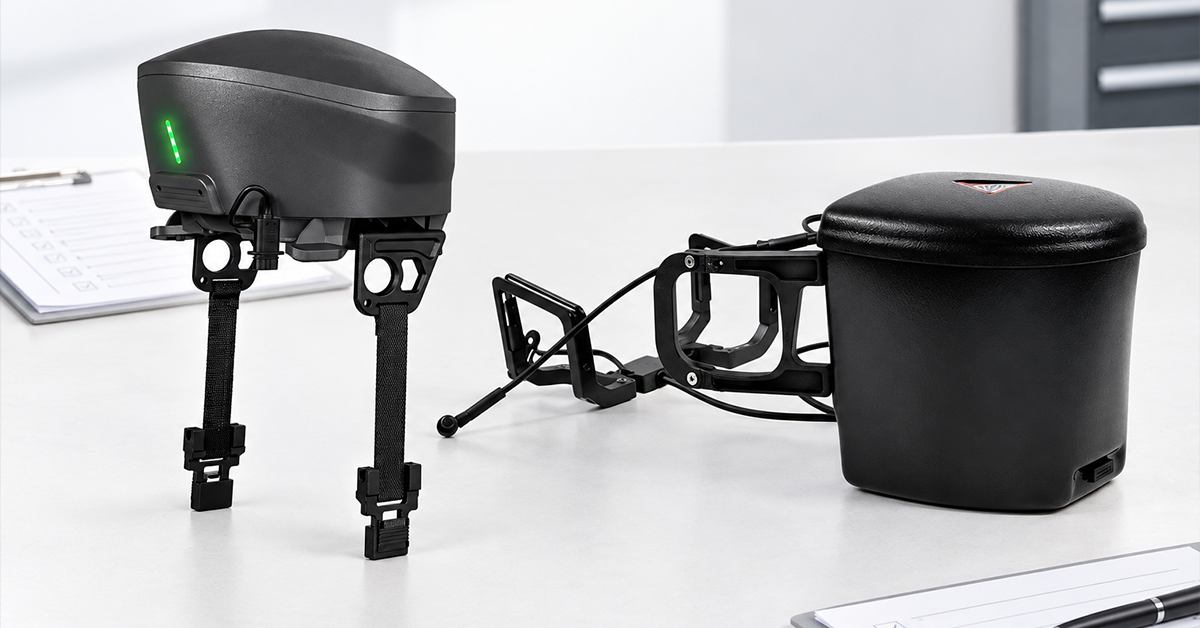
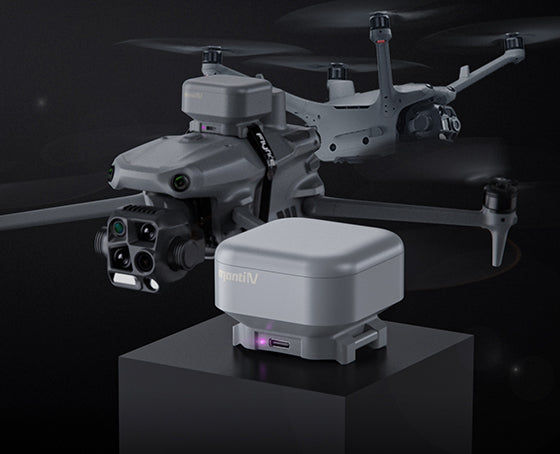
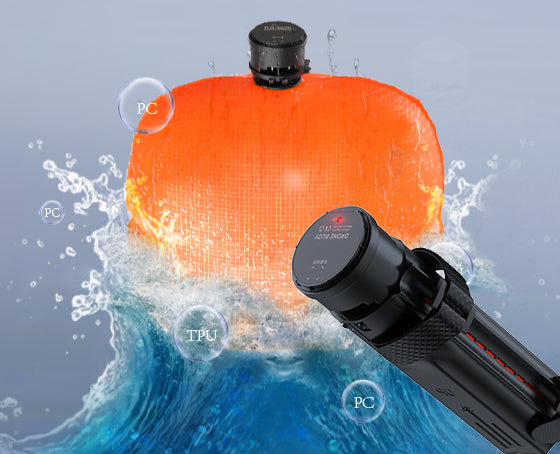
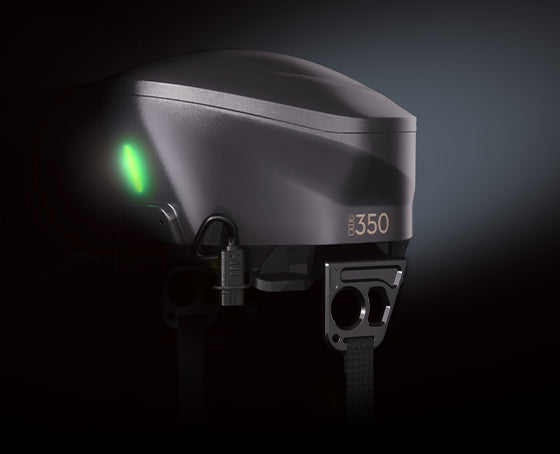
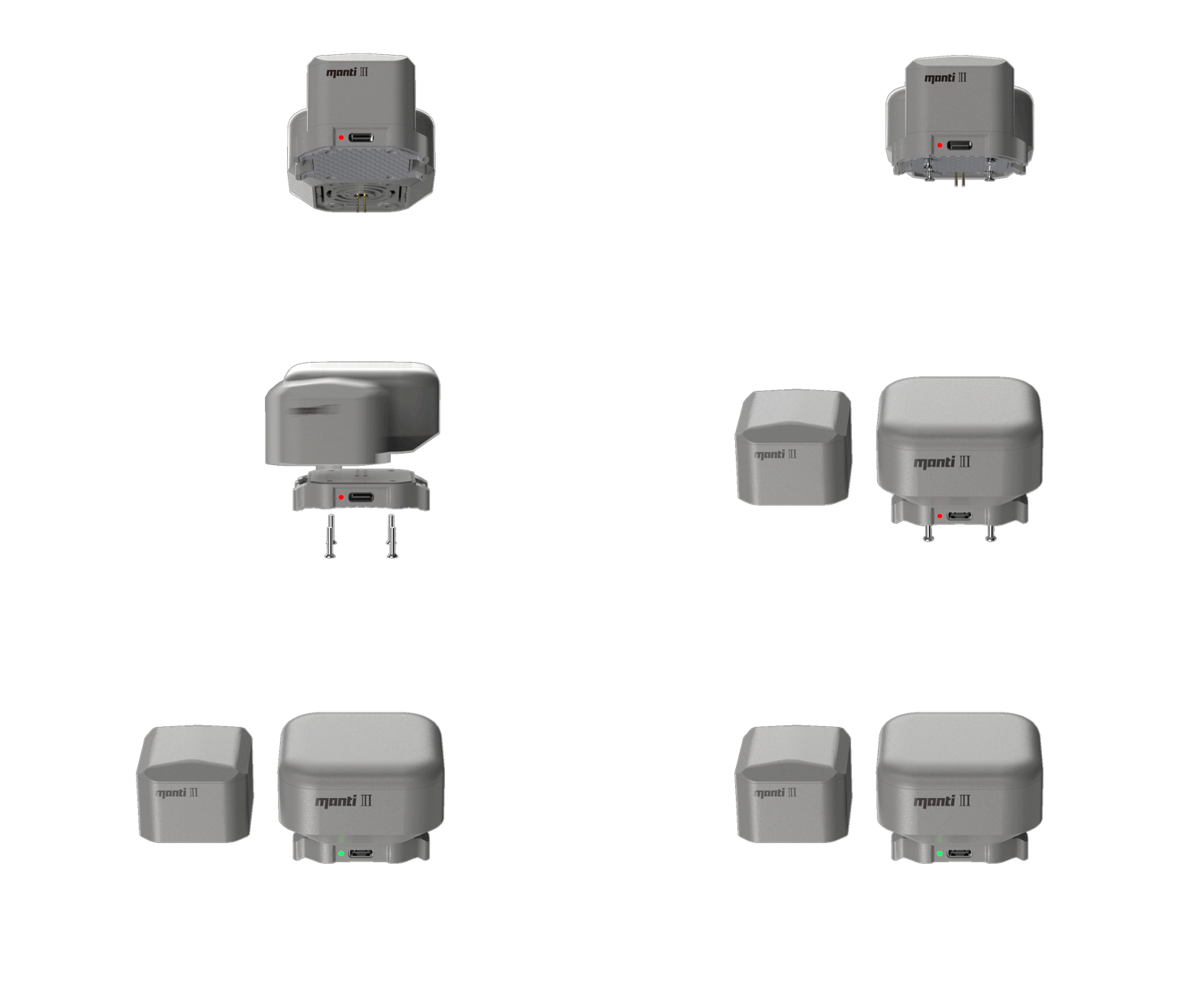
FlyFire developed the Manti 4 Dock in cooperation with DJI. It's a parachute and flight-termination system made for the Matrice 4D/4TD inside Dock 3. It activates with the aircraft and is managed through the DJI software you already use:
- It connects to the aircraft through the E-Port Lite PSDK interface.
- When termination is triggered, the flight controller stops the propellers first and only then deploys the parachute, which avoids propeller entanglement.
- It weighs 80 g (92 g for the red/blue strobe edition), well within the Matrice 4 series' 240 g accessory margin.
- Minimum opening height is 30 m.
- Parachute status can be monitored, and flight termination triggered remotely, through DJI Pilot 2 and FlightHub 2.
See the Manti 4 Dock product page.
Want to explore more drone technology and safety topics? Visit the FLYFIRE blog for more articles and insights.
Decision checklist
- Do your missions arrive unpredictably, and must the aircraft relaunch within seconds?
- How many sorties per day do you fly, and can they be scheduled around charging?
- Can your site handle a heavier dock, up to 2,000 W of input and an O4 Ground Station?
- Do you need -40°C operation, long-range thermal imaging or 17-category onboard AI?
- Are you ready to replace the aircraft, retrain staff and rebuild workflows?
If questions 1 and 4 are mostly a no, your Dock 3 fleet will likely keep serving you well. If they're a yes and question 3 isn't a problem, Dock 4 deserves a serious look.